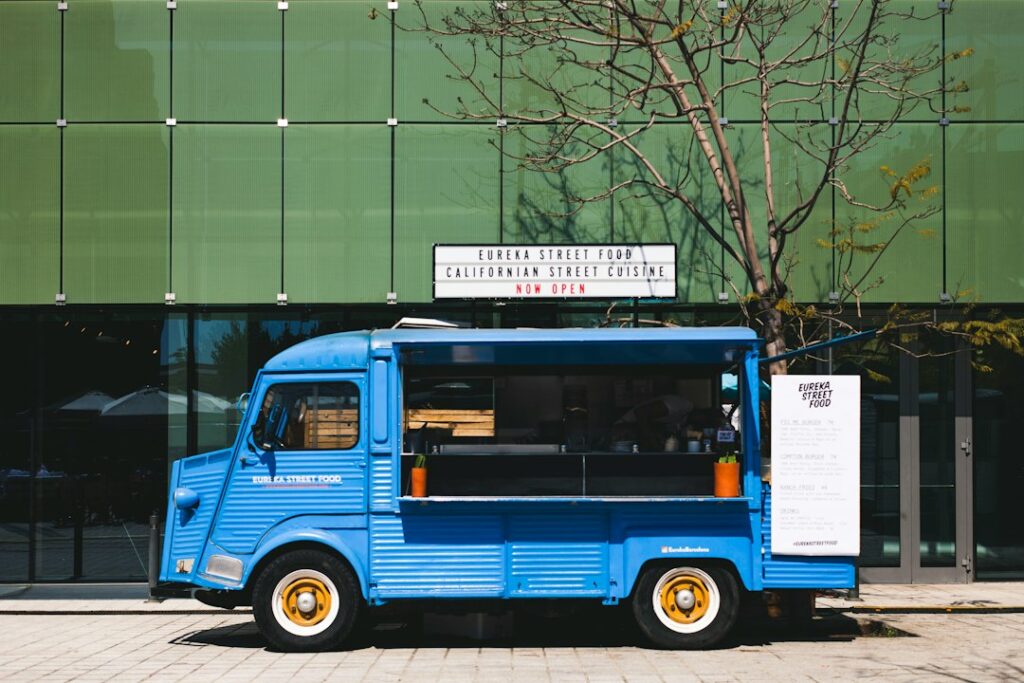
A food cart has limited preparation space, service time, and stock. Those constraints matter more than an AI prediction that a particular dish will be popular. Start with a small menu you can prepare consistently, then use your own records to decide what to improve.
AI can organize sales notes, suggest questions, and draft clearer descriptions. It should work from costs and recipes you have checked. A menu that looks profitable on a screen can still fail if it slows the queue, creates waste, or cannot be served safely.
Write down the cost of a real portion
Choose one item and document its standard recipe, usable yield, portion size, ingredients, packaging, and relevant transaction charges. Use current supplier prices. Account for trimming, spoilage, and portions that differ from the intended size rather than calculating as if every purchased ingredient becomes a sale.
Keep item-level costs separate from overhead such as permits, insurance, fuel, equipment, event fees, and general staffing. Both matter. A positive contribution from one sale does not mean the whole operation is profitable.
In a simplified fictional example, an item selling for $9 with $3.50 of specified direct costs leaves $5.50 toward remaining costs and profit. That is a contribution, not take-home earnings. Recheck the calculation when ingredients, portion sizes, discounts, or fees change.
Compare popularity with effort and waste
Use a simple record of how many portions were prepared, sold, discarded, or unavailable. Add notes about preparation time and service bottlenecks. Review comparable trading periods where possible, while recording differences such as location, weather, or a nearby event.
A popular item may create a long queue or require ingredients used nowhere else. A less popular item might share preparation with the rest of the menu and be easy to serve. AI can summarize these tradeoffs, but you decide which constraints matter.
Ask: “Using only these item records, identify questions about low sales, waste, and preparation burden. Show the numbers behind each observation. Do not invent demand forecasts or suggest changes to food-safety procedures.”
Keep food safety outside the experiment
The FDA Food Code is a model used by regulators to develop food-safety rules. Check the rules adopted by your local authority and the requirements for your cart, products, and trading location. An AI response is not a permit, inspection, or approval of a preparation process.
Verify ingredient and allergen information from your actual recipes, supplier labels, and handling procedures. Do not let AI guess whether a dish is free of an allergen or whether a substitution is safe for a particular customer. Train staff to refer uncertain questions to the responsible person rather than offering reassurance.
Keep changes to storage, cooking, cooling, holding, cleaning, and cross-contact controls under the guidance of your qualified food-safety lead and relevant authority. A discount must never be used to justify selling food that does not meet your safety procedures. This is business-planning information, not food-safety certification.
Make the menu easier to understand
Give an assistant the verified item name, ingredients, portion information, price, and approved dietary wording. Ask for short descriptions that distinguish dishes without adding claims. Reject invented origin stories, health benefits, premium ingredients, or exaggerated portion sizes.
Read the menu at the distance a waiting customer will see it. Check contrast, text size, price placement, and whether an unavailable item can be removed promptly. A clear printed board may be more useful than a digital display that is hard to read outdoors.
Use photographs of the food you actually serve when practical. If you use an illustration, keep it clearly illustrative and avoid showing ingredients or portions the customer will not receive. Inspect every visual before publishing it.
Test one meaningful change
Choose a limited trial: remove one slow item, simplify a description, adjust one portion option, or test a clearly stated bundle. Write down the reason and the outcome you will watch before making the change.
Keep prices clear and consistent with what the customer is charged. If a promotion has a time limit or quantity condition, display it plainly. Avoid changing prices for individual customers based on guessed willingness to pay or sensitive personal information.
Measure more than revenue. Track units sold, direct costs, waste, service time, complaints, and whether the change displaced another item. A higher average transaction can still be unhelpful if it increases preparation costs or slows service substantially.
Use the results to choose the next menu
After the trial, compare the records and note other things that changed. A busy festival and a quiet weekday are not a clean comparison. Small samples can suggest a next test without establishing a lasting demand pattern.
Keep customer feedback voluntary and avoid collecting identifiable information when aggregate notes will do. Ask AI to group comments, then read the original notes to ensure a single complaint has not become a claim about everyone.
Decide whether to keep, revise, or reverse the change. Update recipe costs and staff instructions alongside the menu. If you are testing a new venue, our article on planning a small retail pop-up offers a related way to examine location costs before committing.
AI disclosure: This article was written and revised with AI assistance. Sources checked September 28, 2026. See our disclaimer.
Illustrative photograph by Ryan Waring on Unsplash.


