AI-generated artwork can help a brewery explore a seasonal label concept. Turning that concept into packaging requires a different set of skills: accurate product information, readable typography, production files and the applicable labeling review. A striking image alone is not a print-ready label.
This article explains a possible design workflow for a brewery or freelance designer. AI Over 40 is not offering a label subscription, a printing partnership or a compliance service. Start with one real assignment before promising a stream of monthly designs.
Obtain the production brief before making artwork
Ask the brewery for the exact container, printer’s current template, release schedule and approved brand assets. A bottle, can and shrink sleeve have different production requirements. Do not resize a generic rectangle and assume it will fit.
Keep product facts separate from the creative brief. The brewery should supply approved wording for the product identity, alcohol statement where applicable, volume, business details and other required information. Confirm who is responsible for regulatory decisions and who can approve the final proof.
For a fictional seasonal ale, the creative brief might request a river landscape in two colors with a consistent space for the brewery name. Specify which elements change with each release and which remain fixed. Use a placeholder product name until the brewery has cleared and approved it.
Generate concepts without generating the compliance text
Ask an image tool for an illustration or texture, leaving text areas empty. A useful prompt describes composition, colors, subject and space requirements. It should not instruct the model to reproduce another brewery’s label or a recognizable entertainment character.
Choose a small number of distinct directions. Inspect the full image for malformed objects, accidental lettering, implausible scenes and copied-looking logos. Explain to the client which parts used AI and what you plan to redraw or adjust. Avoid presenting the result as exclusive artwork unless you can support that commitment.
The U.S. Copyright Office’s AI guidance ties protection to sufficient human expressive contribution, not prompting alone. Separately check tool terms and permissions for fonts, stock assets and supplied references. Paying for software is not a complete rights review.
Reserve a stable area for approved information
For U.S. products, start with the TTB’s mandatory malt-beverage label information. Requirements include items such as brand identity, product designation, net contents and the appropriate business information; other statements depend on the product. The required alcohol health warning has its own rules. Have the brewery confirm the complete requirements for its product and market rather than treating this article as a compliance checklist.
Place approved wording as editable text in your layout software. Do not rely on lettering embedded in generated artwork. Keep compliance text visible, readable and away from seams or other areas the printer identifies as unsuitable. Compare the final wording character by character with the approved copy.
A monthly artwork change is not automatically a new approval application, nor is every change exempt. TTB lists allowable revisions to approved labels with conditions. The brewery should determine whether a proposed change fits those conditions and check other applicable federal, state and market requirements before production.
Build to the printer’s specifications
Use the actual template and ask the printer about bleed, safe areas, color setup, resolution, finishing and how files should be supplied. If a metallic or clear material is involved, clarify how white ink and transparent areas are represented. Requirements vary; an attractive screen mockup cannot answer those questions.
Keep the cutting guide separate from the artwork and follow the printer’s export instructions. Confirm that fonts, linked assets and image quality survive export. Inspect both the editable file and the final production PDF or other requested format.
Print a size-accurate paper mockup to assess hierarchy and fit, then obtain the printer’s appropriate proof. Check the actual approved container where possible. View the label at shelf distance and close up, paying attention to small text, contrast, seams and barcode placement.
A barcode is functional data, not decoration. Obtain the correct code from the brewery or its authorized source, place it according to production guidance and arrange a scan check of the physical proof. Do not ask an image generator to invent one.
Make a recurring service accountable
A sensible pilot package might cover one concept selection, one label size, a defined revision round and a production handoff. Specify whether illustration cleanup, additional container sizes, proofs, printer liaison and regulatory review are included or separately arranged.
Maintain a release sheet containing product name, approved facts, artwork version, proof date and final approver. Separate the approval of visual direction from approval of the production file. If the brewery changes a fact after signoff, issue a new version rather than overwriting an ambiguous file.
Calculate the fee from the whole job: meetings, design, corrections, rights checks, proofing and handoff. A subscription should reflect an actual release schedule and capacity, with clear rules for unused work and urgent changes. For broader brand foundations, see using AI without skipping the logo design work. Reliable packaging comes from the complete process, not the number of concepts generated.
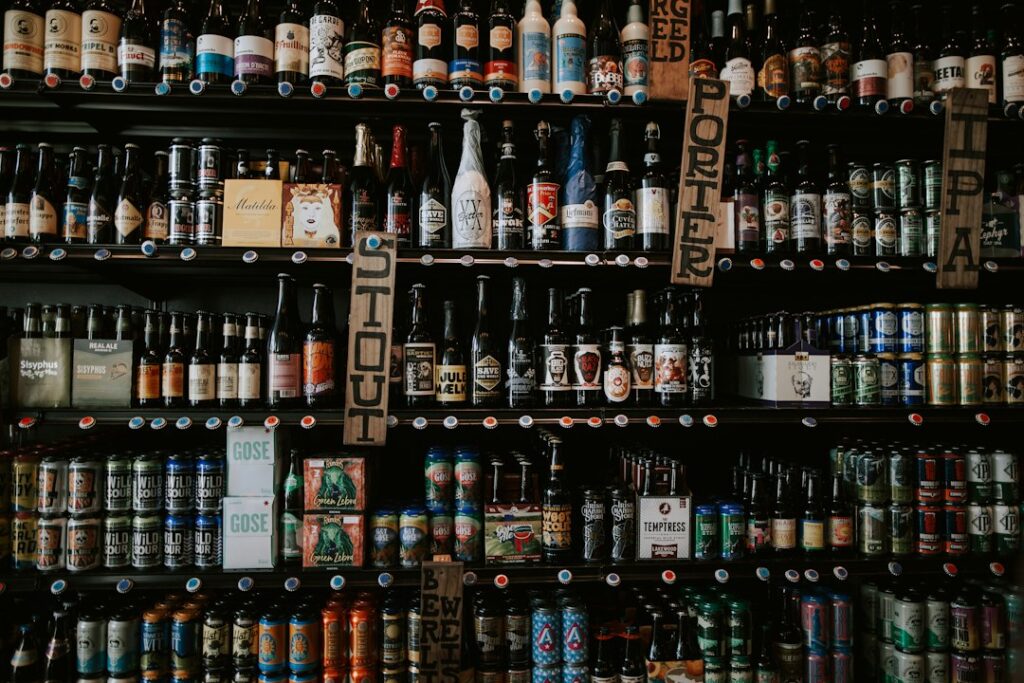
Featured photograph: Christin Hume on Unsplash. Illustrative stock photograph; the displayed labels are not presented as AI-generated designs.
Updated September 27, 2026. This article was created with AI assistance. For general information; check current product terms and obtain qualified advice where appropriate. Read our disclaimer.


