Music for a café, shop or reception area has a practical job: support the setting without making conversation difficult or exhausting the staff. AI can help turn a written brief into candidate tracks or organize a schedule. It cannot decide what a particular room sounds like or grant permission to play a recording there.
If you want to offer playlist curation as a service, start with a venue and a defined listening problem. The deliverable is a usable music plan with clear operating responsibilities, not a prediction that a soundtrack will increase sales.
Settle playback permission first
A personal streaming subscription is not a business music license. Spotify says its service is for personal, non-commercial use and cannot be played publicly from businesses such as shops, restaurants or salons. Paying for Premium does not change that restriction.
Business services have their own scope. Soundtrack describes different public-performance requirements by country, with certain coverage included in the U.S. and Canada and exceptions for activities such as admission-charging events, live music and exercise classes. Confirm the actual location, activity and required licenses with the provider or relevant rights organization.
Do not assume permission for background playback also covers a livestream, advertisement, edited video or remix. Those uses need separate checking. Decide in writing whether the venue or your business holds the accounts and handles licensing, then verify that arrangement before any public playback.
Translate the venue’s needs into a useful brief
Ask when music plays, which spaces need separate control, who adjusts volume and what customers come to do. A busy checkout, a quiet reading area and an evening reception may need different choices. Do not infer taste from customers’ ages; ask the venue what has worked and what people have complained about.
Write down preferred styles, excluded subjects, explicit-language limits, desired energy and how much repetition staff can tolerate. Include accessibility concerns such as whether someone can comfortably hear a conversation over the music. A genre label alone is too vague to settle these decisions.
For a fictional bookshop, a brief could be: “Relaxed instrumental background music during browsing hours, no abrupt changes, no vocals competing with readings, and a simple silence control for announcements.” This is a starting proposal to discuss, not a claim about what every bookshop should play.
Use AI for selection, then listen
Soundtrack’s AI Playlist Creator accepts descriptive prompts to generate editable playlists. Check current plan availability and catalog coverage. A general chatbot can also organize a brief, but any track titles it proposes need checking against the licensed catalog; it may invent or misidentify recordings.
Try: “Suggest a sequence structure for three hours of quiet bookshop music, with gradual energy changes and no sudden loud transitions. Explain the role of each section. Do not claim to have listened to recordings.” If using a music service’s generator, add your actual style preferences and exclusions.
Listen to the selected versions, not just their titles. Check lyrics where present, abrupt introductions, long silences, jarring transitions and inappropriate subject matter. An explicit-content filter is helpful but does not decide whether a track suits a particular occasion.
Save an approved version and a note explaining substitutions. Catalog availability can change; decide who reviews replacements rather than allowing a missing track to be replaced without attention.
Try the plan in the actual room
Arrange a permitted listening check at normal operating conditions. Listen near the speakers, at the service counter and where visitors talk. Ask staff whether they can hear requests comfortably. Record practical observations such as “too loud at checkout” rather than treating a guessed emotion score as evidence.
Provide instructions for starting, pausing, lowering volume and switching to an approved alternative. Make sure the setup does not depend on a staff member’s personal account. Agree what happens if the network fails and use only a provider-supported offline arrangement where available.
A simple review sheet can record date, time block, playlist version, volume setting, interruptions and staff feedback. This is enough for a small pilot. There is no need to infer customers’ moods with cameras or collect individual listening profiles.
Price ongoing curation honestly
A starter service could include a written music brief, two scheduled listening blocks, one on-site or remote setup review and a handover sheet. List subscription charges, licensing work and equipment separately. Confirm whether monthly updates include listening to replacements or only rearranging an approved library.
Measure preparation and review time before selling unlimited revisions. Ask whether the result fits the venue and reduces avoidable staff work. Sales changes can have many causes; do not attribute them to your playlist without an appropriate study.
If the client needs original music embedded in a production rather than public background playback, see creating AI music for client projects. That is a different assignment with different licensing questions.
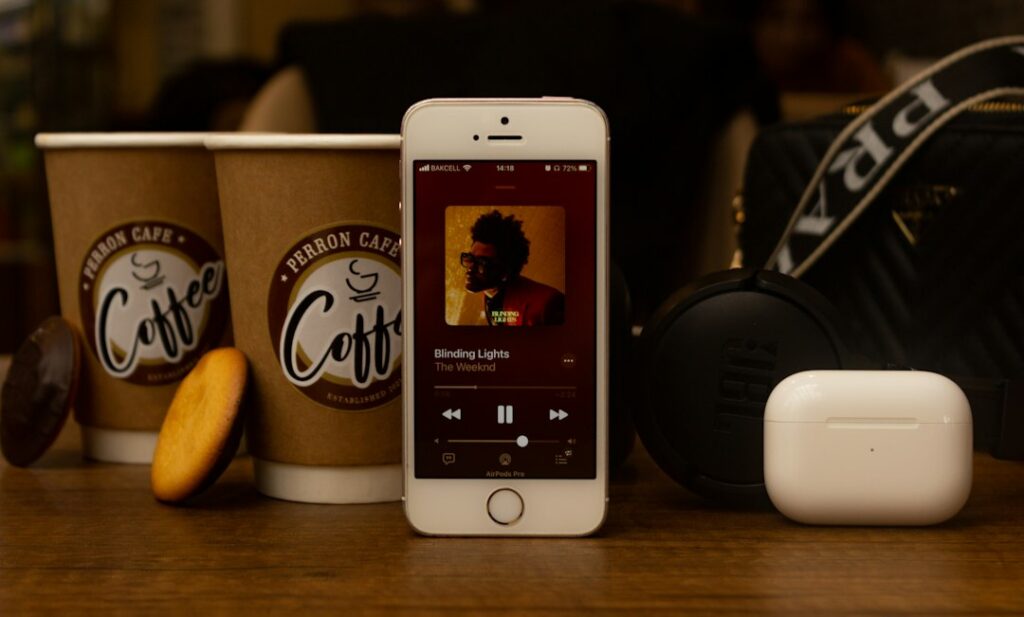
Featured photograph: Ali Mammadli on Unsplash. Illustrative photograph of personal listening equipment; it does not demonstrate permission for business playback.
Updated September 27, 2026. This article was created with AI assistance. For general information; check current product terms and obtain qualified advice where appropriate. Read our disclaimer.


