Agricultural AI is easier to evaluate when you start with a decision the farm already needs to make. “Can this help us identify areas to inspect?” is a testable question. “Will AI make the farm sustainable and profitable?” is too broad to guide a purchase.
Whether you manage a farm, advise one or are exploring the field, combine the software’s claims with local knowledge and a limited trial. A convincing demonstration is the beginning of evaluation, not the result.
Identify the actual technology
Precision agriculture, automation and AI overlap, but they are not interchangeable. A GPS-guided process, a fixed irrigation timer and a model that classifies crop images do different jobs. Ask the supplier to describe the input, the calculation and the output in plain language.
A USDA Agricultural Research Service interview on soil research describes using AI to organize large datasets and satellite images to investigate soil and moisture patterns. It also emphasizes the importance of farmers’ knowledge and human decisions. That research example is not validation of an unrelated commercial product or a guarantee of savings on your land.
Write down what the proposed tool will do. A map highlighting unusual areas for inspection is different from a system that directly changes equipment settings. The second has additional operational consequences and needs appropriate expertise, controls and authorization.
Ask for evidence that matches your operation
Request results for the crop, region, conditions and equipment that matter to your use. Ask how the system performs when the available data are incomplete or the season differs from its development data.
Useful questions include: What was the output compared against? Who collected the reference observations? What errors occurred? Were the trials independent of the seller? Does the tested software version match the one offered? If the answer is only an impressive accuracy percentage, ask what that percentage actually counts.
A model can perform well on a collection of images yet fail to improve a practical decision. Check whether the evidence supports the specific benefit being sold: better detection, less time spent reviewing data, lower input use or improved financial results. These require different measurements.
Define a pilot before installing anything
Choose a limited area or process with your agronomist or other relevant specialist. Record the existing procedure and agree on a comparison that is fair enough to answer the question. Differences in soil, weather and management can otherwise be mistaken for an effect of the software.
A planning sheet should name the person responsible, the starting conditions, the measurements, the trial period and the conditions for stopping. Decide which outputs need field confirmation and who can authorize an operational change. Keep the ordinary procedure available if the tool becomes unavailable.
Turn this proposed farm technology trial into a decision checklist. Separate vendor claims, observations we will collect, costs, missing evidence and decisions requiring our specialist. Do not invent performance estimates or recommend fertilizer, pesticide or irrigation rates.
Review the generated checklist with the people who will do the work. AI can organize a trial plan; it cannot establish that the design controls every relevant variable.
Count the whole cost of using it
Include hardware, installation, subscriptions, connectivity, staff training, calibration, repairs and the time needed to check outputs. Consider compatibility with existing equipment and the cost of exporting data or changing suppliers.
Iowa State University Extension’s partial-budgeting method considers added income, reduced costs, added costs and reduced income from a proposed change. Use realistic assumptions and examine less favourable scenarios. The method estimates possible effects; it does not guarantee a profitable outcome.
Distinguish actual measured savings from projected savings. If a product reduces one resource but adds energy use, maintenance or another input, keep those changes visible. “Eco-friendly” is not a substitute for defining what was measured and compared.
Check data and failure arrangements
Before sharing farm maps, production records or client information, review who can access them and how they may be used. Confirm export formats, deletion options, retention terms and what happens when the contract ends. Obtain appropriate permission before using another farm’s data in a general chatbot.
Test the practical response to missing connectivity, a damaged sensor or an obviously wrong recommendation. People need to know when an output is stale and how to return to the established procedure. A coloured dashboard should not hide missing data.
Keep chemical applications, equipment safety and other specialist decisions within the applicable professional guidance and product instructions. Do not use generated advice as authority to bypass them.
Make a decision from the trial
Compare the agreed measurements with the baseline and record uncertainties. Expand only if the evidence, workload and costs support it. A decision to revise the trial or stop can be a useful result.
If you offer consulting, describe the work you are qualified to do and the evidence behind your recommendations. Access to AI does not itself provide agronomic competence or justify promises of guaranteed yield, resource savings or income.
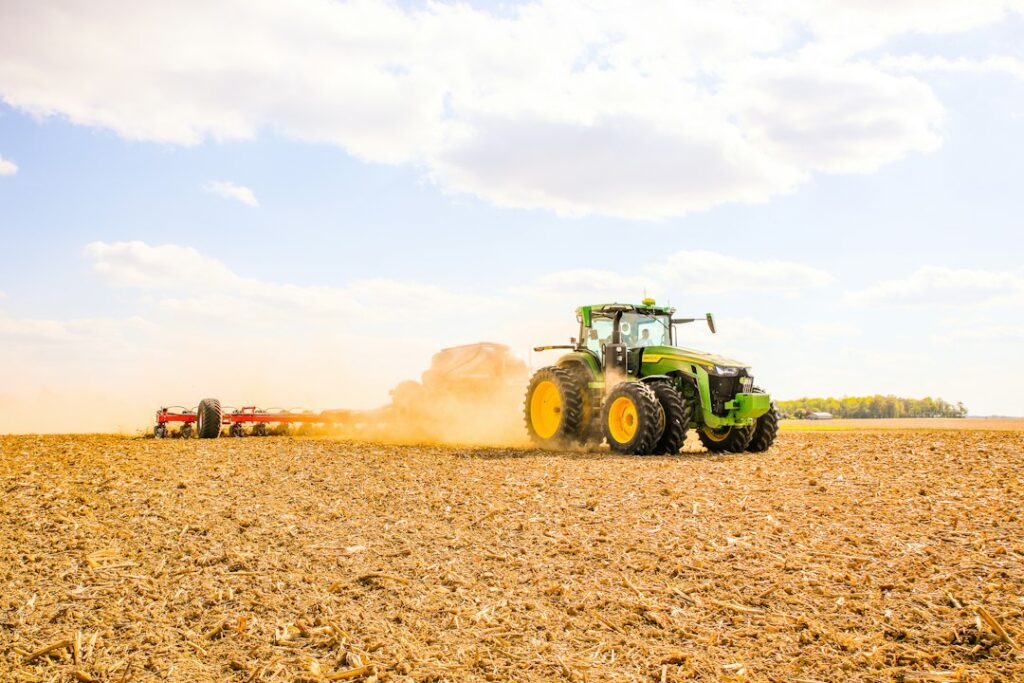
Photo: Hannah Shedrow on Unsplash. Illustrative farm machinery; the photograph does not establish that this equipment uses AI.
Updated September 25, 2026. Prepared with AI assistance and checked against the sources linked in this article. This is educational information, not personal medical, veterinary or other professional advice, and not a hands-on product test. See our disclaimer.


