AI can help you prepare a game night by suggesting a theme, organizing a short rules reminder, or drafting a fictional encounter. It is less useful when it confidently invents a rule halfway through play.
The distinction is simple: creative ideas can be changed to suit the group; published rules need a source. A good evening depends on people enjoying themselves, not on using the newest tool.
Choose the kind of help you want
For a board game, you might need a reminder of the turn sequence or help narrowing a list of games you already own. For a tabletop role-playing game, you might want character names, a setting, or a problem for players to solve.
State the number of players, available time, preferred complexity, and any relevant accessibility needs. Ask people what they enjoy instead of assuming that older players want simpler games or that experienced players want a long campaign.
If AI suggests a game to buy, check the publisher’s current description for player count, language, components, and expected duration. Treat the estimate as planning information, since learning and setup can add time.
Keep rules tied to an edition
Name the exact game and edition when asking about rules. Expansions, revised editions, and house rules can change the answer. A chatbot can combine information from different versions without making the mismatch obvious.
Use the rulebook or the publisher’s official corrections to settle questions. For example, D&D Beyond’s Basic Rules provides a publisher-maintained starting point for that game’s rules. It is not a rulebook for every fantasy role-playing system.
Using only this permitted rules excerpt, make a short turn-order reminder. Preserve the original terminology. Point to the passage supporting each step. If the excerpt does not answer a question, say so. Keep any suggested house rule separate from the published rules.
Share only material you have permission to use with the service. Review the result before the game, and keep the original rulebook nearby. Do not let a plausible page number substitute for checking the page.
Use creative prompts where mistakes are cheap
Here is an original fictional prompt for a short, system-neutral adventure:
Create a lighthearted mystery at a village lantern festival. Give me three characters, one missing object, three clues, and two possible explanations. Avoid graphic violence. Do not add game statistics or claim to follow a published setting. Leave the ending open to the players’ choices.
You could decide that the missing object is a ceremonial bell, the baker borrowed it to summon help, and the supposed villain is simply trying to return it unnoticed. That is a story seed, not a tested adventure or a balanced game encounter.
Check that the clues actually support an explanation and that the characters’ motives make sense. Keep only the parts you like. The AI’s willingness to generate more material does not mean the group needs more material.
Keep people in charge of the table
The publisher’s Dungeon Master guidance emphasizes shared storytelling, communication, and facilitating enjoyment. An AI assistant can prepare options, but it does not know whether someone at your table is bored, uncomfortable, or waiting to speak.
Agree on the tone and subjects to avoid before play. Let people change their minds without having to explain private experiences to an app. Ask before recording or uploading anything from the session.
During play, a long conversation with a chatbot can break the pace. Consider using AI before the session and keeping the table itself screen-light. If you do use it live, have a person review the answer and make the final decision.
Check continuity, not just colorful wording
For an ongoing campaign, keep a short record of what actually happened: character names, important choices, unfinished questions, and any agreed house rules. Label future ideas separately so a generated suggestion does not become a false memory of the session.
Ask AI to identify contradictions in that record, then check the original notes. Our article on finding notes with AI explains a source-checking approach that also works for a campaign notebook.
Finish by asking the group what they would like next time. Their answer is the best measure of whether the preparation helped. If an ordinary deck of cards and a conversation make the evening work, no AI is required.
Updated September 23, 2026. Prepared with AI assistance and checked against the sources linked above. Examples described as fictional are illustrations, not reports of product testing. See our disclaimer.
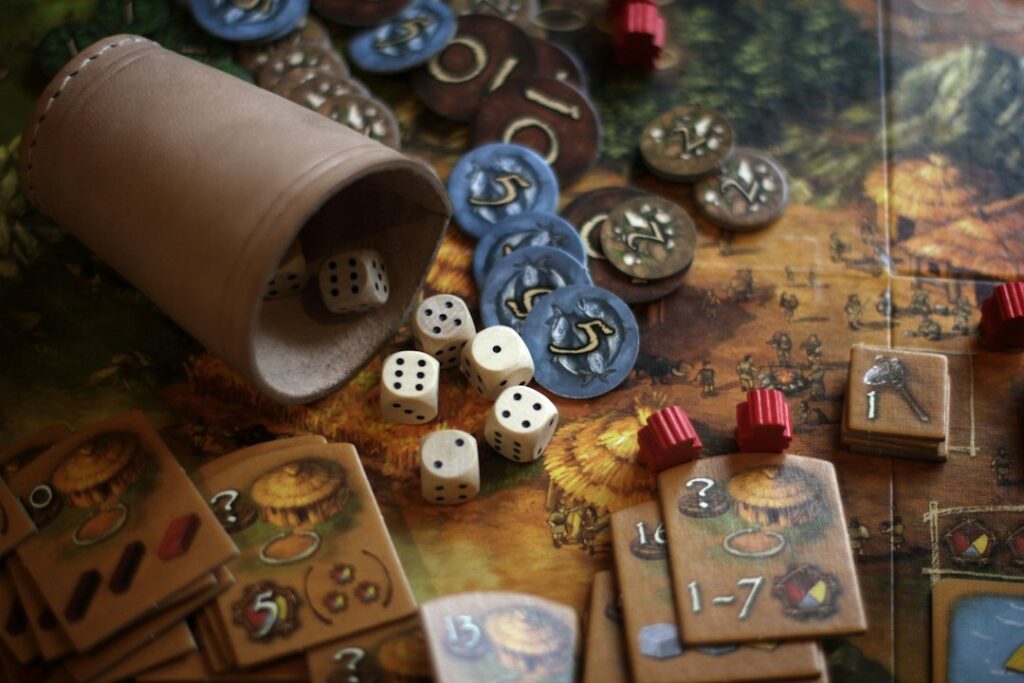
Featured image: Fox & Hyde / Unsplash. Image for illustration.


