Updated September 23, 2026.
An AI bird-identification app can turn an unfamiliar call into a useful clue. Its best role is helping you notice and investigate birds around you. A name appearing on a screen is not proof that the bird is present.
For a first outing, use an ordinary place you can visit comfortably: a garden, a park bench, or an accessible trail. Start by listening. You do not need a smart feeder, a new camera, or a large collection of apps to find out whether this is a hobby you enjoy.
Understand what the app is suggesting
The Cornell Lab’s Merlin Sound ID suggests bird species from recorded sounds. Species recognition is different from translating what a bird “means.” A separate photo-identification feature addresses a different kind of evidence. Neither should be confused with a general chatbot inventing a likely answer from a brief description.
Think of the suggestion as a lead. It tells you which reference recording or species account to investigate. It does not tell you how many birds are present, guarantee an identification, or establish that an unusual species should be entered into a public record.
Try one short listening session
Choose a spot where you can pause without blocking a path or approaching wildlife. Check that the app has the relevant location and permissions. Record a manageable segment of the sound you actually hear, keeping your own voice and handling noise out of it as much as possible.
Afterward, choose one suggestion to investigate instead of trying to confirm an entire screen of names. Save the original recording. Make your own short note about the setting, the date, and whether you saw the source of the sound.
The Cornell Lab’s Sound ID best practices say to verify suggestions independently. Compare the relevant part of the recording with reference examples, consider the species’ range, habitat, and season, and look for the bird when possible. Correct location information matters. If you are not confident, do not submit the suggestion to eBird as a confirmed identification.
A fictional example: one name, several questions
Suppose an app proposes a species you have never seen locally. Instead of announcing a rare sighting, make three notes: “app suggestion,” “sound I recorded,” and “evidence still missing.” You might discover that a common bird has a similar call, that the recording contains distant human noise, or simply that the available evidence is too weak.
All three outcomes are useful. They teach you to compare features rather than memorize an answer. Leaving an observation unidentified is honest birdwatching, not failure.
Ask a knowledgeable local birder or group for help if you remain curious. Share an appropriate recording and your observations, and identify the app’s label as a suggestion. Avoid presenting a cleaned-up AI description as something you personally saw.
Keep a learning notebook separate from a life list
A learning notebook can hold uncertain possibilities. A confirmed list needs your own identification standard. Keeping those separate prevents one confident-looking result from becoming a permanent “fact” you repeat later.
- Date and general location.
- What you heard or saw before consulting the app.
- The app’s suggestion and the recording file.
- Which comparison helped, and what remains uncertain.
- Your conclusion: confirmed, tentative, or unidentified.
A chatbot can organize your notes into that structure, but should not fill in missing plumage, behavior, or weather details. Use our approach to finding and checking notes if your collection becomes hard to search.
Keep the experience considerate
Watch from a respectful distance and follow the site’s wildlife rules. You can have a worthwhile session without playing calls to attract birds, approaching a nest, or sharing a sensitive location publicly. Use headphones if you compare reference audio around other people.
Before sharing a recording, listen for private conversations or other identifying information captured accidentally. A photo’s appeal and a recording’s usefulness do not override other people’s privacy.
Buy equipment only after finding the need
If you later consider a camera feeder, ask about maintenance, mounting, image quality, storage, power, connectivity, subscriptions, and data sharing. AI species labels do not remove those practical responsibilities. A device should solve a problem you actually encountered.
A good first goal is to recognize one familiar bird more confidently on your next visit. The screen becomes useful when it sends your attention back to the bird.
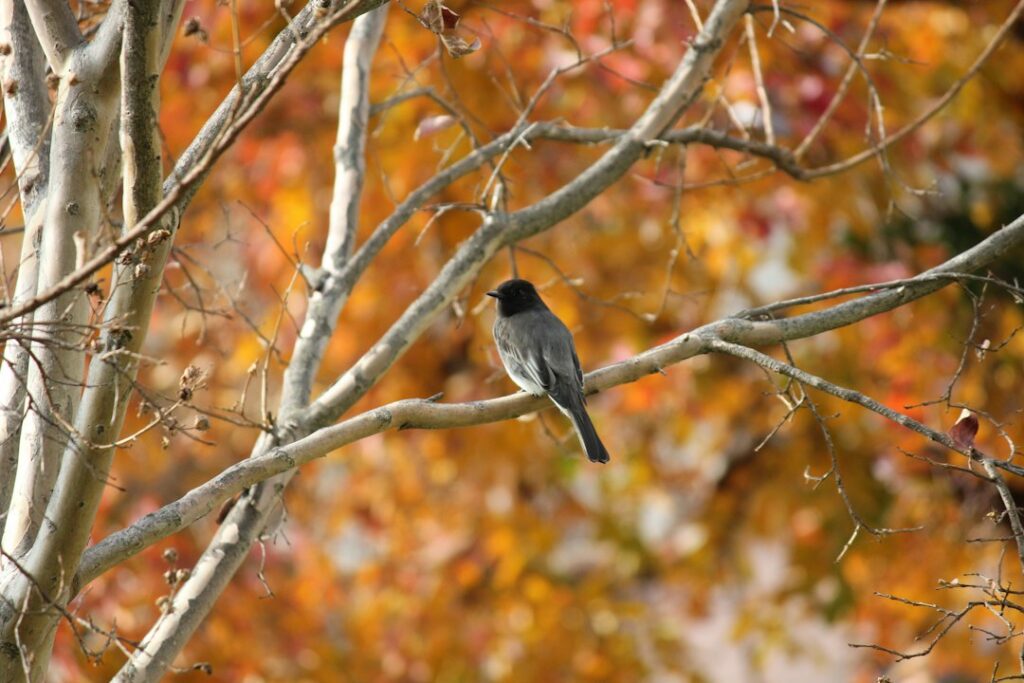
Photo by anish lakkapragada on Unsplash. Illustrative photograph.
This article was created and updated with AI assistance. Sources were checked for this update. It provides general information; see our disclaimer.


