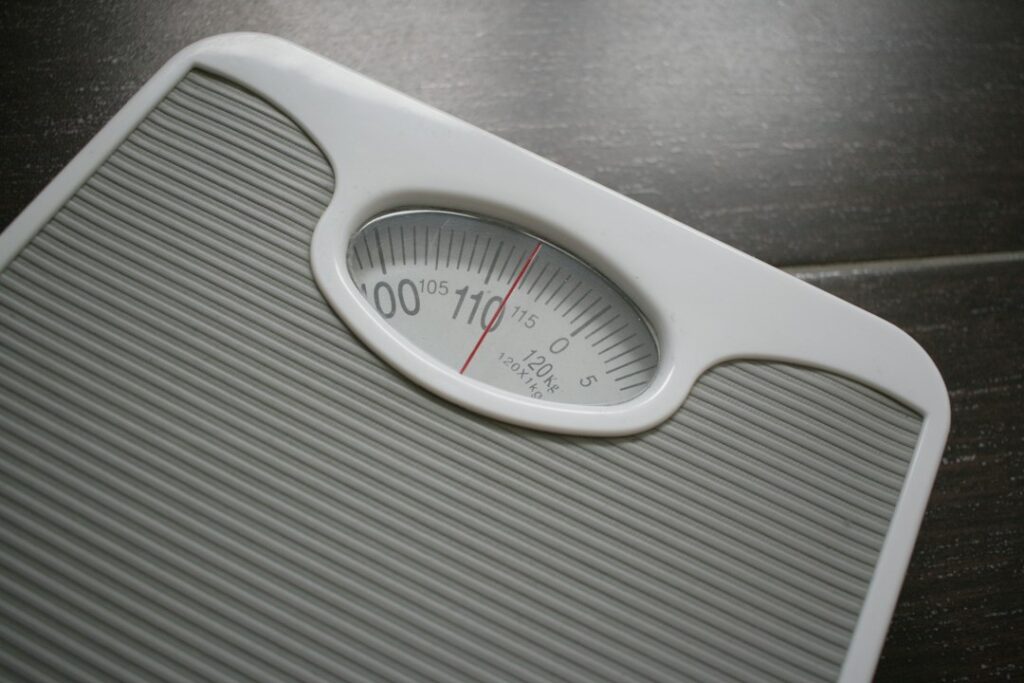
A smart scale can send weight readings to your phone and produce a dashboard of body fat, muscle, water and other estimates. An AI assistant may then explain the dashboard in confident language. These are different operations: measuring something, estimating something else from it, and writing an interpretation.
If you are exploring fitness technology in your 40s, 50s or beyond, separating those steps is more useful than collecting more scores. The question is what a number can support, not how many decimal places appear beside it.
Weight and body composition are different measurements
A conventional scale measures body weight. Many consumer body-composition scales also use bioelectrical impedance analysis, or BIA: they pass a small electrical signal through the body and use the measured impedance, together with profile information and an equation, to estimate body composition. They do not directly weigh your fat or muscle.
A 2021 observational study comparing three smart scales with DXA found substantially better agreement for weight than for body-composition estimates. Fat and muscle results differed enough that the researchers advised against replacing clinical assessment with those scales. That study tested particular devices and patients; it is not a verdict on every current model.
Consequently, a scale that measures weight well has not automatically proved its body-fat estimate accurate. A polished AI explanation adds no independent measurement. Ask which exact feature has been validated, on which model, against what comparison, and in people relevant to your circumstances.
Make the reading interpretable
Start with the manufacturer’s instructions for your own model. Withings, for example, explains in its Body Smart troubleshooting instructions that hydration affects body-composition readings. Its preparation and positioning instructions are model-specific, rather than a universal protocol for all scales.
Follow the device’s restrictions, including any instructions concerning implanted medical devices or pregnancy. Ask your clinician or the relevant device manufacturer when an instruction applies to you. Do not experiment with a prohibited feature just because an app offers reassuring language.
For an ordinary measurement record, preserve the date, time, device, units and circumstances. Note a device change or unusual measurement conditions instead of silently merging everything into one chart. Consistent conditions may reduce avoidable variation, but they do not establish accuracy or prove that every apparent trend reflects a real change in body tissue.
Use AI as a filing assistant
A useful first task is to organize a small, non-identifying sample of exported readings. Keep the original file. Ask for a table before requesting an explanation, and compare several rows against the source yourself.
Organize these readings by date. Keep weight and estimated body-fat percentage in separate columns. Preserve the original units and flag missing or duplicate entries. Do not fill gaps, diagnose a condition, set targets or recommend changes to food, exercise or medication. List questions I could ask about the data.
This can expose a pounds-versus-kilograms mix-up or a repeated row. It cannot establish whether a scale’s underlying estimate is correct. A chatbot may also alter a value while formatting, so a tidy table is still a draft to check.
Consider a fictional example: a graph shows a sudden change after someone replaces their scale. The first question is whether the two devices use comparable methods and settings. It would be premature to label the change muscle loss or prescribe a new eating plan. The transition should remain visible in the record.
Know what deserves professional interpretation
Do not let a body-fat score diagnose illness, prescribe calorie targets or determine whether you need a scan. If a measurement or an unexplained weight change concerns you, bring the original record to your clinician. Ask whether the measurement matters for the decision at hand and whether another assessment would add useful information.
For readers already following a clinician’s weight-monitoring plan, that plan takes priority over general app advice, including when to make contact. An AI summary should preserve those instructions exactly, not invent alert thresholds or interpret a reassuring graph as permission to ignore symptoms.
You can also choose not to track body composition. If repeated checking creates distress or unhelpful food and exercise rules, discuss that with an appropriate professional. More measurement is not automatically better care.
Check the account before connecting it
Before linking a scale to an AI service, see which records will transfer, whether sharing continues automatically, and how to disconnect it. A screenshot can expose names, dates and other health information beyond the number you intended to discuss. Use a minimal example when learning the tool.
The practical outcome is modest and useful: a clear record, fewer transcription mistakes and better questions. A smart scale may help you collect information. It does not need to become the authority over what your body should do next.
Photo: Joachim Schnürle on Unsplash. Illustrative bathroom scale; this is not a bioimpedance device or a product tested for this article.
Updated September 24, 2026. Prepared with AI assistance and checked against the sources linked in this article. This is educational information, not personal medical or professional advice or a hands-on product test. See our disclaimer.


