What you will prepare
Result: A checklist of headset, room and subscription facts to verify before paying.
- Level
- Beginner reading and questions
- Time
- About 10 minutes for the fictional exercise; headset setup and a product trial are separate
- Device
- Phone, tablet or computer; paper also works for the exercise
- Tools
- Paper or a notes app; an AI text chat is optional. No headset, fitness subscription or purchase is needed for this exercise.
Before you begin: Compare documented requirements. Do not use a game score or chatbot answer as exercise clearance.
Time is a planning estimate, not a measured reader result. Go to the fictional practice.
Moving to music, hitting virtual targets or following an immersive class can make exercise more appealing for some people. That is a reason to explore virtual-reality fitness. It is not evidence that every game is powered by AI or that its feedback guarantees safe technique.
If you are considering VR in your 40s or 50s, start with the experience you want, the space you have and the actual features. A clear purchase decision is more useful than a list that calls every animated instructor an intelligent personal trainer.
Find the missing facts in a VR offer
Fictional practice: Fictional MoveRoom offers headset workouts with a subscription. Its short advertisement does not name supported headset models, required clear space or the renewal price.
Try the question yourself, or copy the full prompt into an AI text chat you already use. You can complete the example on paper without opening an account. Use only the fictional material supplied here.
Using only these fictional notes, write three questions about headset compatibility, room requirements and subscription cost. Leave missing facts unresolved. Do not recommend exercise intensity, infer medical clearance or invent product features. Notes: Fictional MoveRoom offers headset workouts with a subscription. Its advertisement omits supported headset models, required clear space and the renewal price.
If a copy control is unavailable, select the prompt text and copy it yourself. Help with copying and pasting.
Read the illustrative result and three checks
Illustrative result, not an observed AI answer: Which headset models and controls are supported? What clear space does the app require? What is the subscription renewal price and billing interval?
- The advertised subscription is not described as free access included with the headset.
- No headset model, room size or renewal price is invented.
- The questions compare an offer; they do not prescribe movement or decide whether exercise is medically suitable.
Finish when: you can explain these checks and keep the missing information visible. If an AI answer adds facts or advice, remove the additions and compare it with the supplied notes.
VR and AI describe different things
VR is the immersive presentation of an environment through a headset. Motion tracking lets software respond to the position of a headset or controllers. AI may be involved in particular features, but an app’s use of tracking, scores or prerecorded classes does not by itself establish that it offers an AI coach.
Ask what the advertised intelligence actually does. Does it recognize a movement, select a class, generate dialogue or estimate performance? What inputs does it use? What does the company say it cannot assess? A virtual instructor can be engaging without being a clinician or observing your entire body.
A high game score means you satisfied the game’s scoring rules. It is not medical clearance, proof of correct form or a reason to override discomfort. Likewise, an estimated calorie figure should not automatically determine what you eat afterward.
Compare an actual app, not a promise
FitXR’s official site, for example, describes several workout studios, including boxing and dance. Its membership documentation describes its class offering and subscription access. Those are features you can check. Those documented features do not establish that an AI coach can guarantee proper form.
Source check — October 20, 2026: FitXR’s membership page describes subscription access to workout studios and features. That supports the distinction between a class offering and a claim of medical or form assessment. It does not establish that an AI coach can guarantee safe technique. Confirm hardware compatibility and your own offer separately; this was not a headset or app test.
This is an example of how to research a service, not a hands-on recommendation or ranking. Before paying for any VR fitness app, verify current headset compatibility, availability in your country, supported controls, space requirements and any movements the classes expect.
- Find a sample or tutorial that shows the actual experience.
- Check whether difficulty is selected by you, follows a fixed progression or uses a documented adaptive feature.
- Look for readable menus, clear audio, pause controls and any relevant accessibility settings.
- Read the current total price, renewal date, cancellation route and refund terms.
- Check which functions remain available if a subscription ends.
Use the terms presented for your account and purchase platform. A promotional price quoted elsewhere may not apply, and buying hardware does not necessarily include ongoing access to a fitness service.
Prepare the room before starting the app
Read the warnings for your specific headset and the app. Meta’s Quest 3 safety instructions, for example, address activity space, controller straps, headset fit, breaks, medical considerations and symptoms that should prompt stopping.
Clear the required space, including overhead hazards, and keep people and pets from entering it. Configure boundaries as instructed. Virtual boundaries are aids, not physical barriers, and they do not guarantee that every obstacle will be detected.
Start with a suitable tutorial and short, manageable use rather than a competitive challenge. Stop if you experience dizziness, nausea, pain or other concerning symptoms, and follow the manufacturer’s guidance about recovery and medical advice. The headset’s safety instructions also identify circumstances in which a clinician should be consulted before use.
Test usability before committing
During a permitted trial or demonstration, evaluate the practical details. Can you get a comfortable, clear fit? Can you find the pause control immediately? Can you read instructions and identify the next movement without rushing? Does setup take longer than you want to spend?
A fictional buyer might enjoy a boxing demonstration but discover that the available room cannot meet the app’s space requirements. That is a useful finding, not a failure to keep up. An ordinary screen-based activity may fit the household better.
If a service offers alternatives to particular movements, verify how they work before relying on them. A menu labeled “beginner” is not a personalized assessment of an injury or medical condition.
Give AI a useful supporting task
You can paste public feature descriptions into an assistant and ask it to build a comparison table with source links. Have it flag missing information about compatibility, subscriptions, controls and space. Then verify the table against the developer’s documentation.
Avoid asking a general chatbot to select exercise intensity from a diagnosis or a few wearable readings. It can help write questions for a clinician or instructor, but it should not replace their assessment.
The best outcome is an activity you can use comfortably, afford and understand. VR does not have to deliver autonomous coaching to be enjoyable. It does need honest descriptions of what is being tracked, what the feedback means and what remains your responsibility.
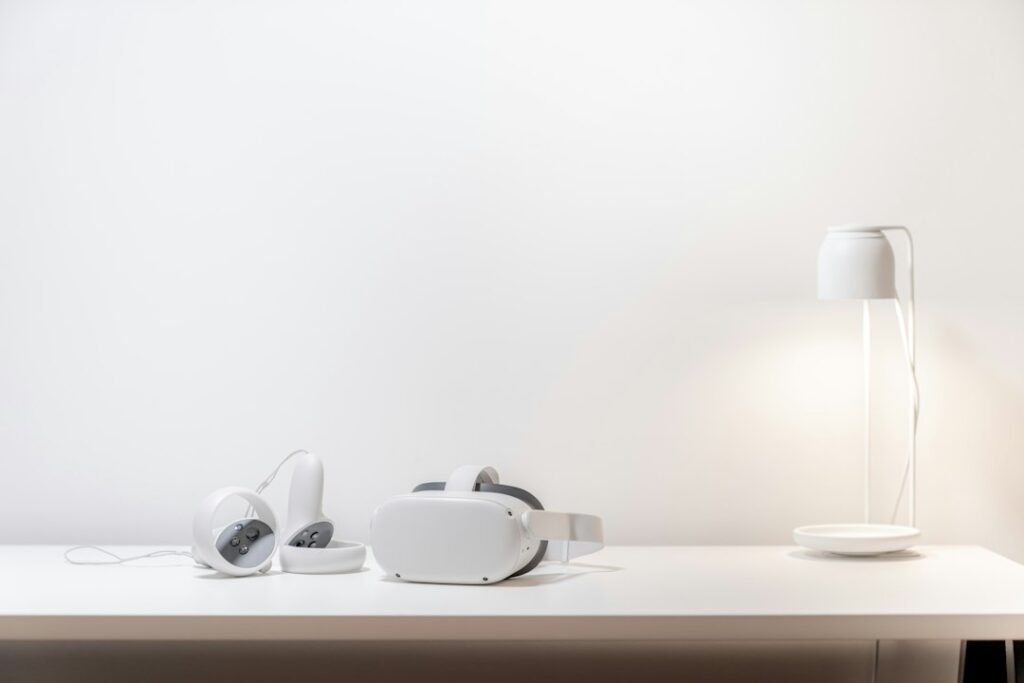
Photo: Vinicius “amnx” Amano on Unsplash. Illustrative VR equipment; no fitness app or hands-on product test is shown.
Updated September 24, 2026. Prepared with AI assistance and checked against the sources linked in this article. This is educational information, not personal medical or professional advice or a hands-on product test. See our disclaimer.


