

Many professionals struggle to grow their AI services because they focus on quick fixes. These fixes might solve immediate problems but don’t help businesses grow in the long run. To succeed, you need to change your approach and Sell the Workflow Not the Prompt.
Operational systems are the future of professional consulting. By creating complete processes, you become more than just a service provider. You become a key partner in solving big business problems, not just quick fixes.
This way of thinking helps you build stronger relationships with clients and earn more. Companies want experts who can make automation part of their daily work. This guide will show you how to make your services indispensable assets. Start focusing on the whole process to make a bigger impact and grow sustainably.
The Shift from Prompt Engineering to Process Design
Writing the perfect prompt is just the start. While prompt engineering skills are valuable, they’re only a small part of what businesses need. To succeed, you must move from giving single commands to designing full workflows.
True professional growth means seeing AI as part of a bigger system. This change is key to monetizing AI expertise and adding lasting value for clients.
Moving Beyond the Single-Turn Interaction
Many professionals get caught in the cycle of single-turn interactions. This method gives a static output, lacking the depth needed for complex tasks. It leaves clients open to unpredictable results.
Designing multi-step processes creates a predictable environment for AI. This involves linking prompts and using feedback to improve the output. It allows you to handle complex tasks with ease.
The Limitations of Selling Static Text Strings
Selling static text strings is a race to the bottom. These prompts are easy to copy, leading to low fees and short-term contracts. If you rely on selling prompts, you’ll find it hard to stand out from free resources.
The secret to monetizing AI expertise is in the workflow design. Clients pay for the efficiency and time saved, not just the text. By focusing on the process, you turn your prompt engineering skills into a valuable service.
Why Clients Value Systems Over Single Inputs
Switching from single prompts to full systems is key to real business value. Decision-makers don’t just look at the text you input. They want to see how your solution fits into their daily work to solve real issues.
The Problem with One-Off AI Solutions
Clients are cautious about AI solutions that don’t fit with their current software. A clever answer from a single prompt might not solve the problem. If a tool needs manual help every time, it’s not a valuable asset.
Offering just a text string is like selling a commodity that can be easily swapped out. True value comes from the system architecture around the AI. By focusing on systems, you show you understand their business needs.
How Systems Create Predictable Business Outcomes
AI workflow automation brings consistent results. Building a system means you can replace manual work or freelancer costs with a reliable process. A $29 prompt can save hundreds of dollars in a big system.
This change helps show clear client ROI by saving time and reducing errors. By focusing on AI business outcomes, you meet the key metrics for stakeholders. You’re selling a growth engine, not just code.
How to Sell the Workflow Not the Prompt
To succeed in today’s market, you must Sell the Workflow Not the Prompt. Clients don’t just want a single text string. They need solutions to ongoing business problems. By focusing on this, you become a valuable partner, not just a commodity provider.
Reframing Your Service as an Operational Asset
Your prompt engineering skills are just the start. When you present your work, show it as an investment in the company’s future. You’re not just giving a tool; you’re creating AI operational assets that keep giving value over time.
Communicating the Full Lifecycle of AI Integration
Understanding the AI integration lifecycle is key to success. Guide your clients through discovery, development, testing, and deployment. This clarity shows your work is a professional solution, not a quick fix.
Identifying the Pain Points in Client Operations
First, you need to find out where clients lose time. Use workflow documentation to pinpoint these areas. Showing clients where their process fails makes your solution obvious.
Positioning Your Workflow as the Bridge to Efficiency
A prompt is just compressed knowledge, but a workflow connects that knowledge to real results. By framing your service this way, you show how it boosts performance. This makes your work a key part of their growth strategy.
Mapping Your Unique Value Proposition
To stand out in a crowded digital market, you need to shift from quick fixes to automated systems. By focusing on a digital product strategy, you move from competing on price to competing on value. This change helps you capture more market share by solving complex problems, not just simple ones.
Defining the Scope of Your Automated Ecosystem
An automated ecosystem is more than just prompts; it’s a place where AI does reliable tasks. By seeing your work as AI operational assets, you give clients a growing infrastructure. You need to clearly set the limits of this system to keep it scalable and easy to manage.
By focusing on a task’s whole lifecycle, you tackle every possible problem. Consistency is key to a professional system. By mapping out these workflows, you create a unique position that generic tools can’t match. This structured approach turns your technical skills into a valuable business solution.
Differentiating Your Methodology from Commodity Prompts
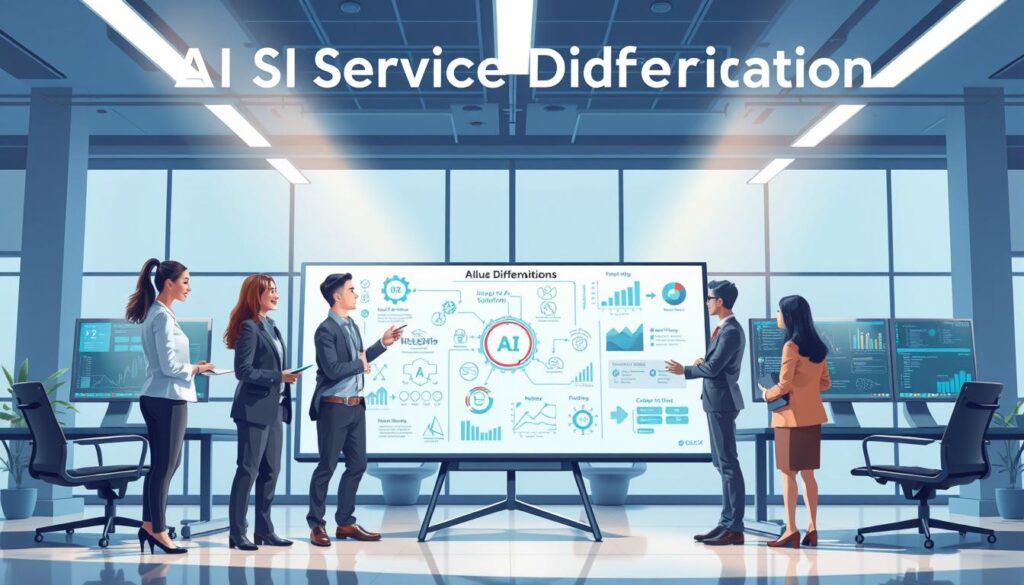
The best experts in this field know that monetizing AI expertise means going beyond individual inputs. While others sell static prompts that may not work well, you offer a method that handles variables and long-term needs. This is the heart of AI service differentiation today.
Your unique method is like a blueprint for AI to make complex decisions. By showing the systemic nature of your work, you prove you’re not just selling a script. You’re selling a strategic advantage. Clients are more likely to invest in a proven framework for predictable results than in a single prompt without support.
Demonstrating ROI Through Scalable Automation
When you focus on real results, your talks with clients change. You move from vague promises to the real power of AI workflow automation. This way, you show you’re a partner in real growth.
Quantifying Time Saved and Error Reduction
Digital products offer a big advantage because they cost nothing to sell more. A solid system can keep running forever without needing more people. This means you can make a lot more money while always giving value.
Keep track of how many hours your system saves each week. Cutting down on manual work or repetitive tasks boosts client ROI by reducing costs. Also, avoiding mistakes saves money on fixing errors and delays.
Presenting Data-Driven Results to Stakeholders
Stakeholders want to see numbers, not just tech details. You need to keep detailed workflow documentation to show your system’s success. This proof shows your automation is a solid, reliable choice.
Share your results in a clear dashboard or report. Compare the old performance to the new one. This transparency builds trust and helps get approval for long-term deals.
Using Case Studies to Validate Workflow Reliability
Real examples are the best way to show your scalable AI solutions work well. A good case study shows the problem, your solution, and the outcome. It turns your method into a proven business strategy.
These stories prove your systems grow without failing. Showing your workflows are built to last justifies higher prices. Reliability is key for any business wanting to grow efficiently.
Overcoming Objections to Workflow-Based Pricing
You can tackle pricing objections by focusing on the results your systems deliver. By talking about the value delivered instead of time, you change the conversation. This shift to value-based pricing helps you move beyond just doing work.
Moving from Hourly Rates to Value-Based Models
Hourly billing can make you earn less if you work faster. But value-based pricing rewards you for success. You’re selling AI business outcomes that boost revenue or cut costs.
When asked about higher fees, explain the impact. A prompt is a tool, but a workflow is a strategic asset. Show how your solution saves the company money every year.

Explaining the Complexity Behind the Simplicity
Clients might think a clean interface is simple. But there’s a lot of sophisticated architecture behind it. This is where your AI service differentiation shines.
Highlight the testing, error handling, and integration logic in your workflows. This shows the value of your system. You’re not just giving a text string; you’re providing a robust, reliable system that works under pressure.
Handling Concerns About AI Dependency
Some worry about relying on your automated workflows. Frame your work as a sustainable competitive advantage, not a crutch. Show how your systems are built for the long haul and can grow with the business.
Explain how your workflows include maintenance and documentation for operational continuity. Positioning your service as a long-term partnership helps ease these concerns. This makes you a trusted advisor who builds resilient AI ecosystems for the future.
Building Long-Term Partnerships Through Operational Excellence
True operational excellence means focusing on long-term strategies, not just one-time tasks. By doing so, you become a key partner in your client’s success. This approach builds a strong business model based on trust and reliable results.
Transitioning from a Vendor to a Strategic Consultant
As a vendor, you mainly handle specific requests. But as a strategic consultant, you help clients tackle their business challenges. You offer scalable AI solutions that adapt to their growth, not just a static tool.
This change lets you shape their tech strategy. You become the go-to expert for solving future problems. This proactive stance makes you a critical part of their team.
Ensuring Workflow Maintenance and Continuous Improvement
The AI integration lifecycle doesn’t stop after setup. Clients need ongoing support to keep their workflows efficient. You must see every project as a dynamic system that needs regular checks and tweaks.
Offering value-based pricing for ongoing support solidifies your business. This model rewards you for the continuous value you add through updates and improvements. Consistency in your service keeps clients ahead in the AI landscape.
Conclusion
Switching from simple text strings to full business solutions is a big step. Success comes from a solid digital product strategy. It focuses on what clients need, not just quick fixes.
By looking at the whole automation lifecycle, you stand out. You move from one-off tasks to steady, ongoing income. Clients value the stability and growth your systems bring to their work.
Being a market leader means you’re all about operational excellence. You keep your services relevant by updating them for new challenges. Quality and consistency beat out fleeting trends every time.
Begin improving your service packages to show off your real skills. You can change how businesses work with reliable, growing AI systems. Your success is built on the systems you create for clients today.